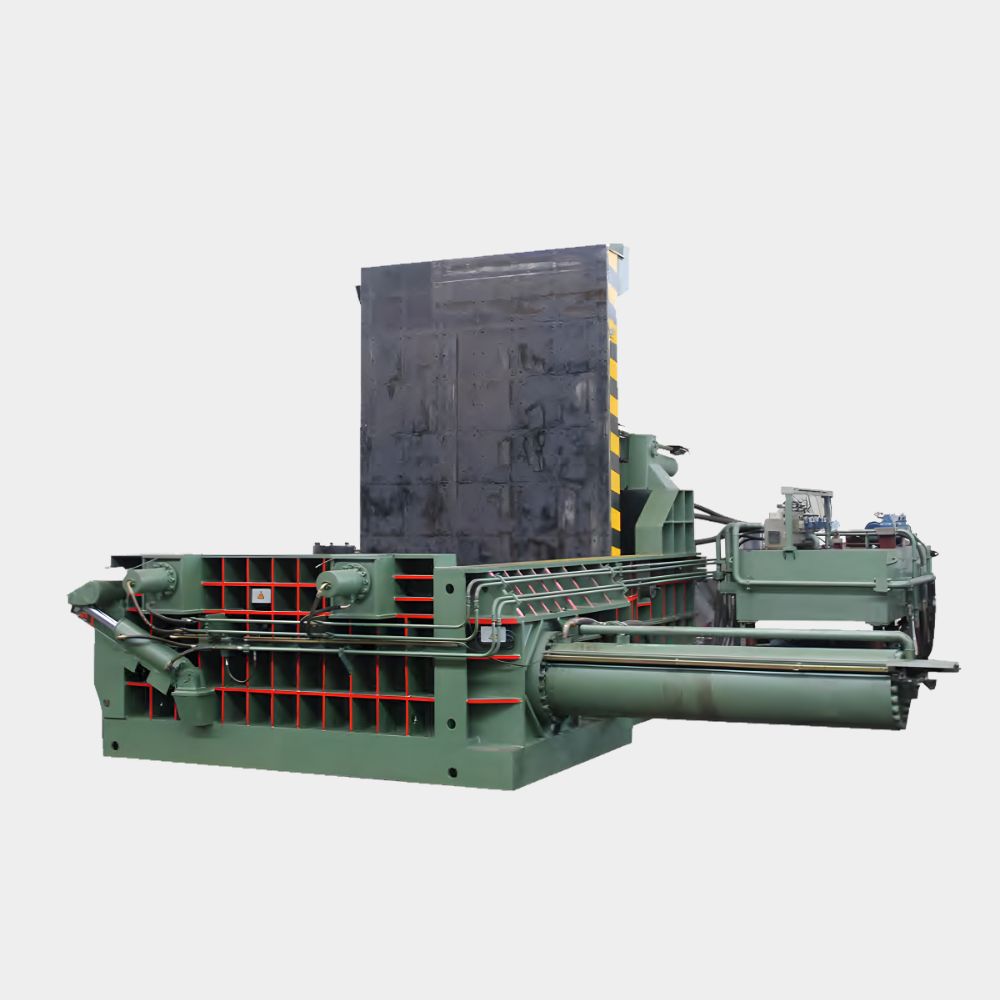
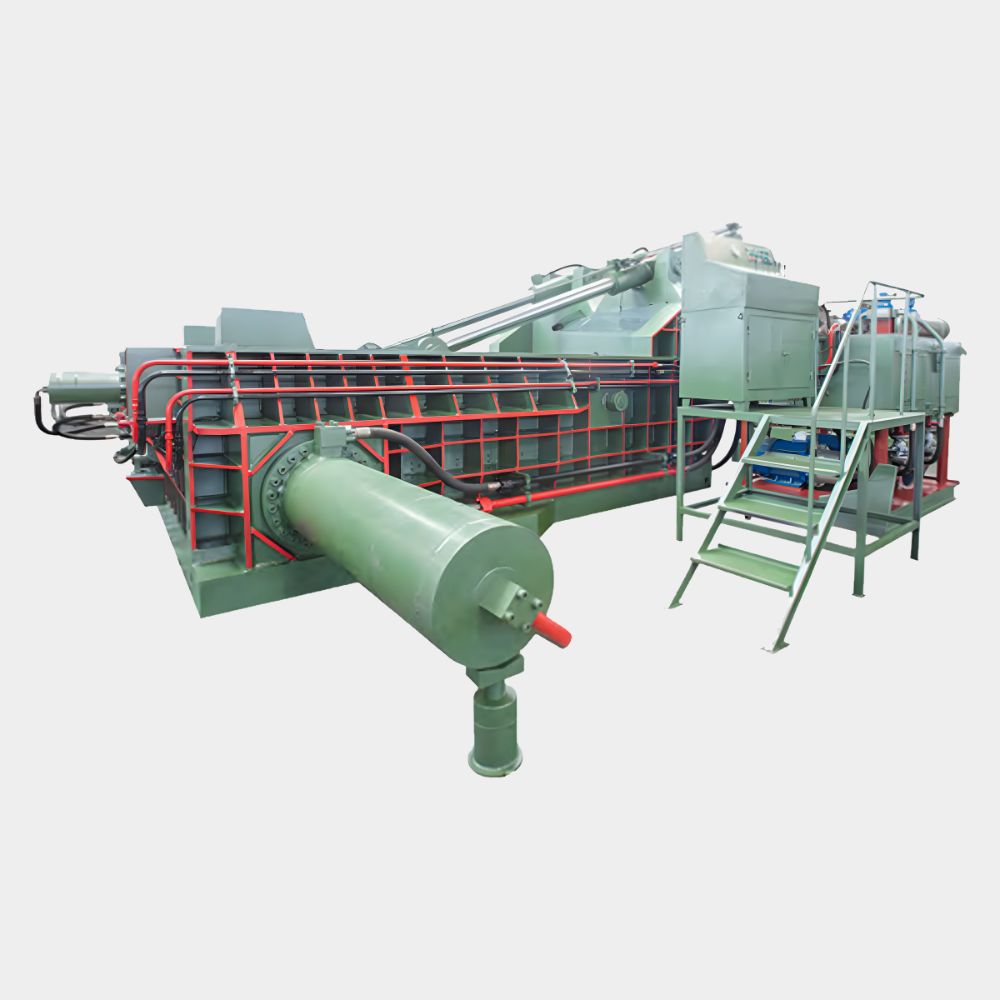
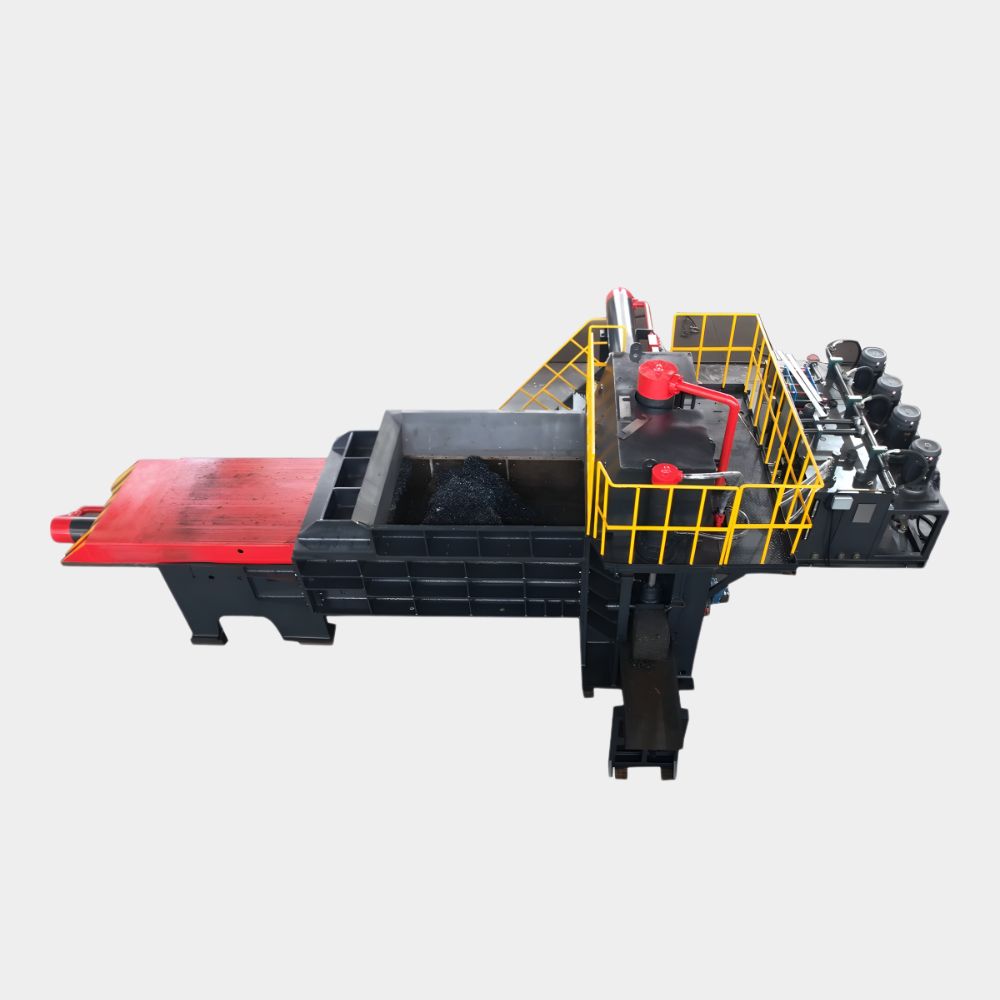
Front Pushout Baler
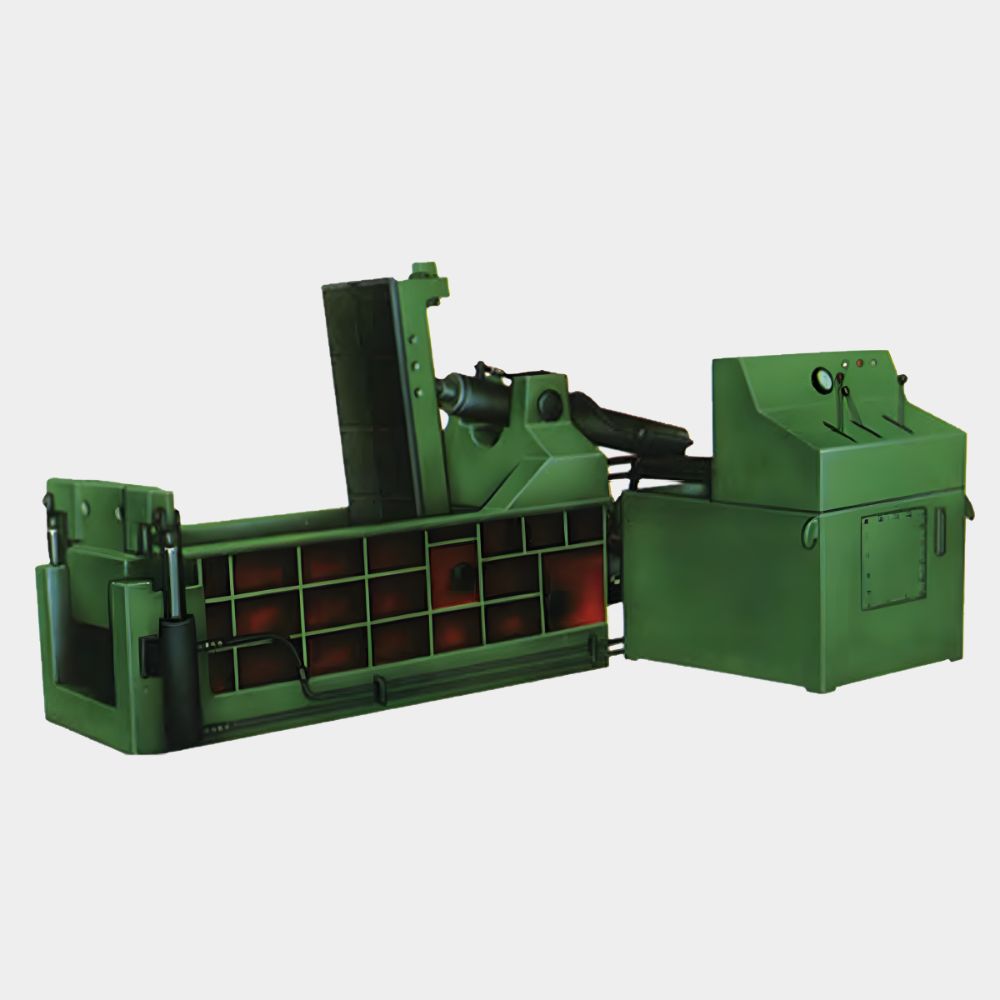
Front Pushout Balers are applied in thickness less than 6mm steel mills, recycling plants, ferrous &non-ferrous smelting industry to press scrap metal (steel, copper, aluminum, stainless steel, discarded automobiles, etc) into acceptable furnace charges in shapes of cuboids, cylinders & octagons. Suitable for scrap processing and distribution center (base), scrap car dismantling and remanufacturing, steel and nonferrous metals industry, etc.
A front pushout baler ejects the finished bale forward, in line with the compression axis, using a dedicated ejection ram. It is the most straightforward discharge arrangement to plan around, and it suits yards where bales are collected directly in front of the machine.
How the discharge works
Once compression is complete, the chamber door opens and an ejection ram pushes the bale out of the front of the machine in a controlled movement. Unlike a flipout arrangement, where the bale is released, a pushout places the bale deliberately, which makes it easier to land bales consistently onto a conveyor, a skip or a stacking area.
What it presses
Scrap metal under 6mm thickness, including steel, copper, aluminium, stainless steel and material from discarded automobiles, compressed into acceptable furnace charges. It is used in steel mills, recycling plants and across the ferrous and non ferrous smelting industry.
Bale shapes
Cuboid, cylindrical and octagonal, depending on the chamber configuration selected at order stage.
Features
- Hydraulic drive with PLC control
- Inclined axial piston pumps for high reliability and high density output
- Wear resistant lining plates protecting the compression chamber
- Designed for operation with minimum maintenance
Front pushout or side pushout
This is a layout decision rather than a performance one. Both produce the same bale.
- Front pushout where the collection area, conveyor or truck bay sits ahead of the machine and there is room to work in front of it
- Side pushout where space in front is constrained, or where the machine sits in a line with feeding at one end and discharge to the side
Work out where bales need to go and how they will be moved before you choose. Getting this wrong adds a handling step to every cycle for the life of the machine.
Consistency and maintenance
Inclined axial piston pumps hold pressure steadily through the stroke, producing uniform bale density cycle after cycle rather than on average. Wear resistant lining plates take the abrasion inside the chamber and are replaceable, which protects the structure behind them and keeps compression consistent as the machine ages.
Specifying a machine
Bale size, chamber configuration and press force are selected against your material, the density your buyer specifies and your throughput per shift. Tell us those three and we will size the machine and plan the feeding and discharge arrangement with it.
Front Pushout Baler Specifications (Front Out and Front Turn Over Models)
| Model | Main Cyl. Force (ton) | Press Box Size (L×W×H/mm) | Bale Size (W×H/mm) | Main Motor Power (kW) |
|---|---|---|---|---|
| Y81/Q - 135 | 135 | 1300×600×600 | 600×240 | 22 |
| Y81/Q - 200 | 200 | 1400×700×600 | 700×280 | 22+15 |
| Y81/Q - 160 | 160 | 1600×1000×800 | 300×300 | 37 |
| Y81/Q - 200 | 200 | 1600×1000×800 | 260 | 37 |
| Y81/Q - 250 | 250 | 2000×1750×900 | 400×400 | 2X30 |
| Y81/Q - 315 | 315 | 3000×2500×1200 | 600×600 | 2X45 |
* Specifications are indicative and subject to change based on requirements and technical advancements.
The bale is pushed out from the front of the chamber once compression is complete. It is the most straightforward discharge arrangement and works well where bales are collected directly in front of the machine.
Scrap metal under 6mm thickness including steel, copper, aluminium, stainless steel and discarded automobile material, compressed into acceptable furnace charges.
Cuboid, cylindrical and octagonal bales, depending on the chamber configuration.
Hydraulic drive with PLC control and inclined axial piston pumps for high reliability and high density output, with wear resistant lining plates in the chamber.
It is mainly a layout decision. Map where the bales need to go and how they will be lifted away, then pick the discharge direction that avoids a second handling step.