Hanging Magnetic Separator
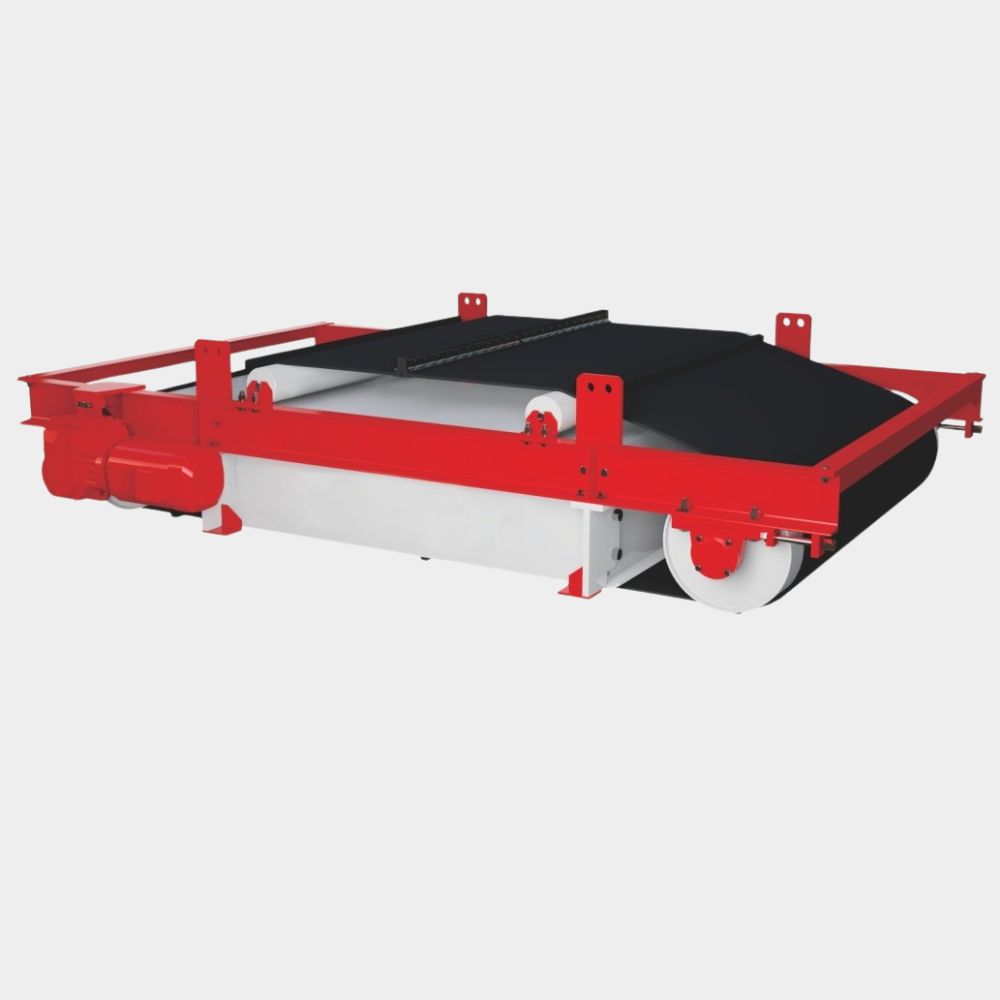
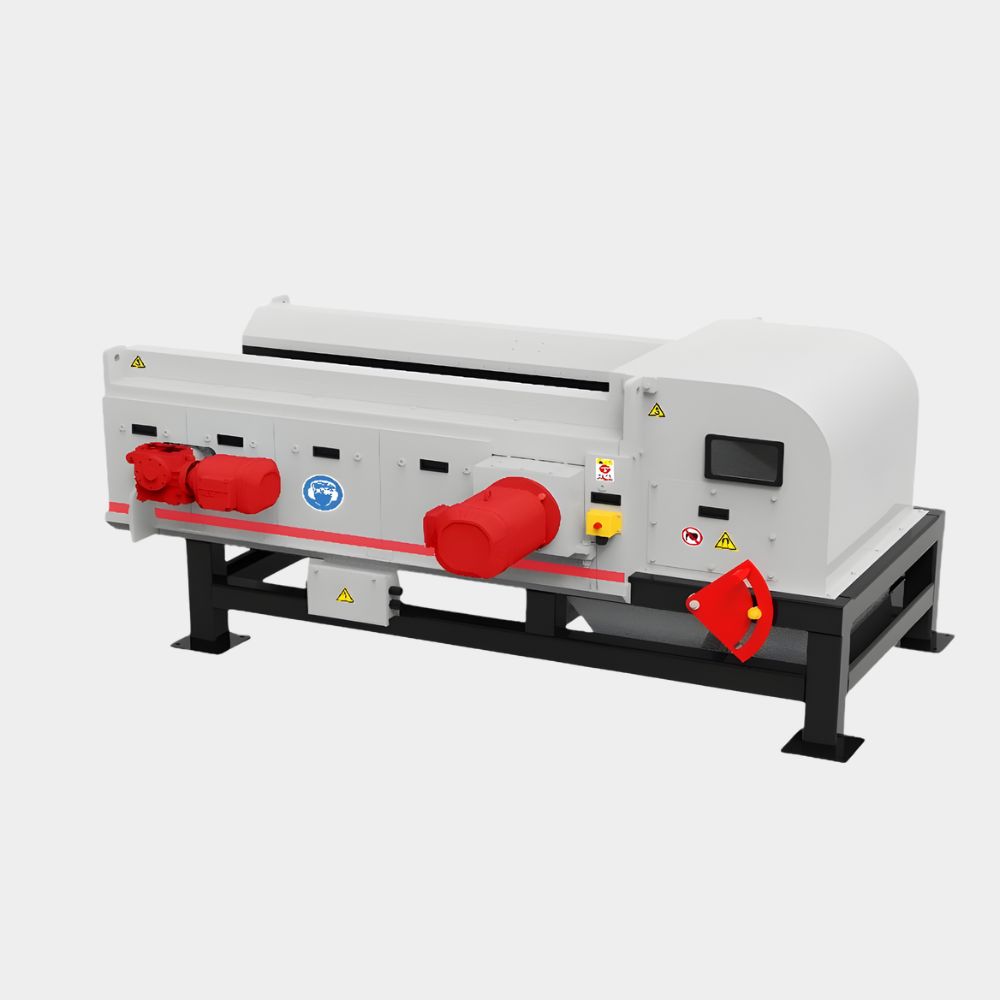
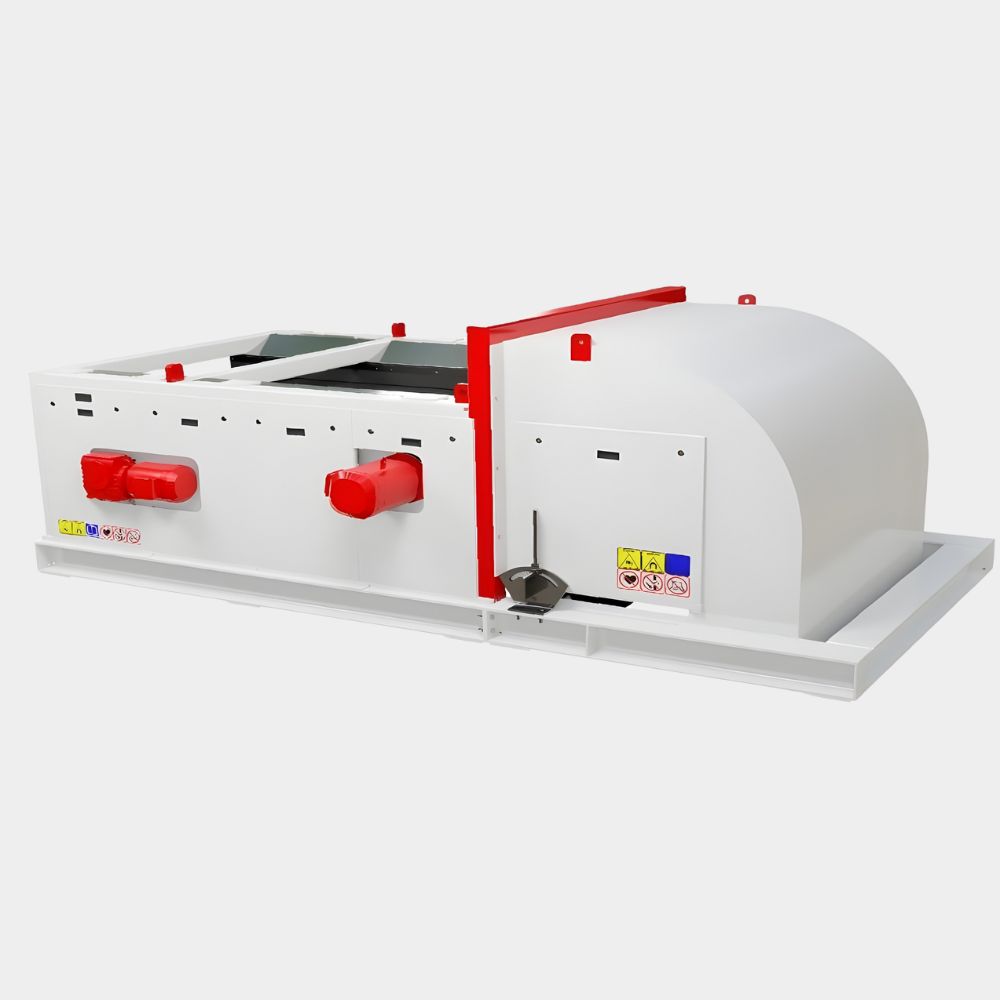
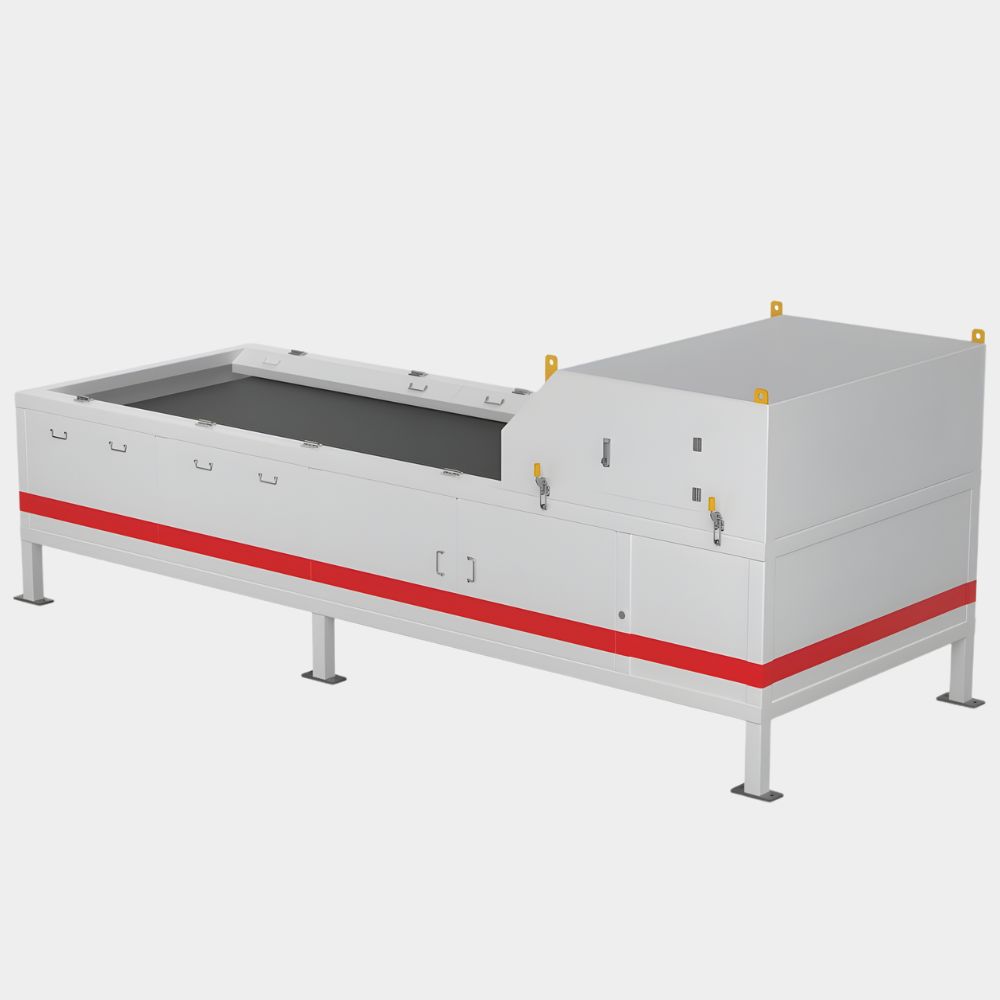
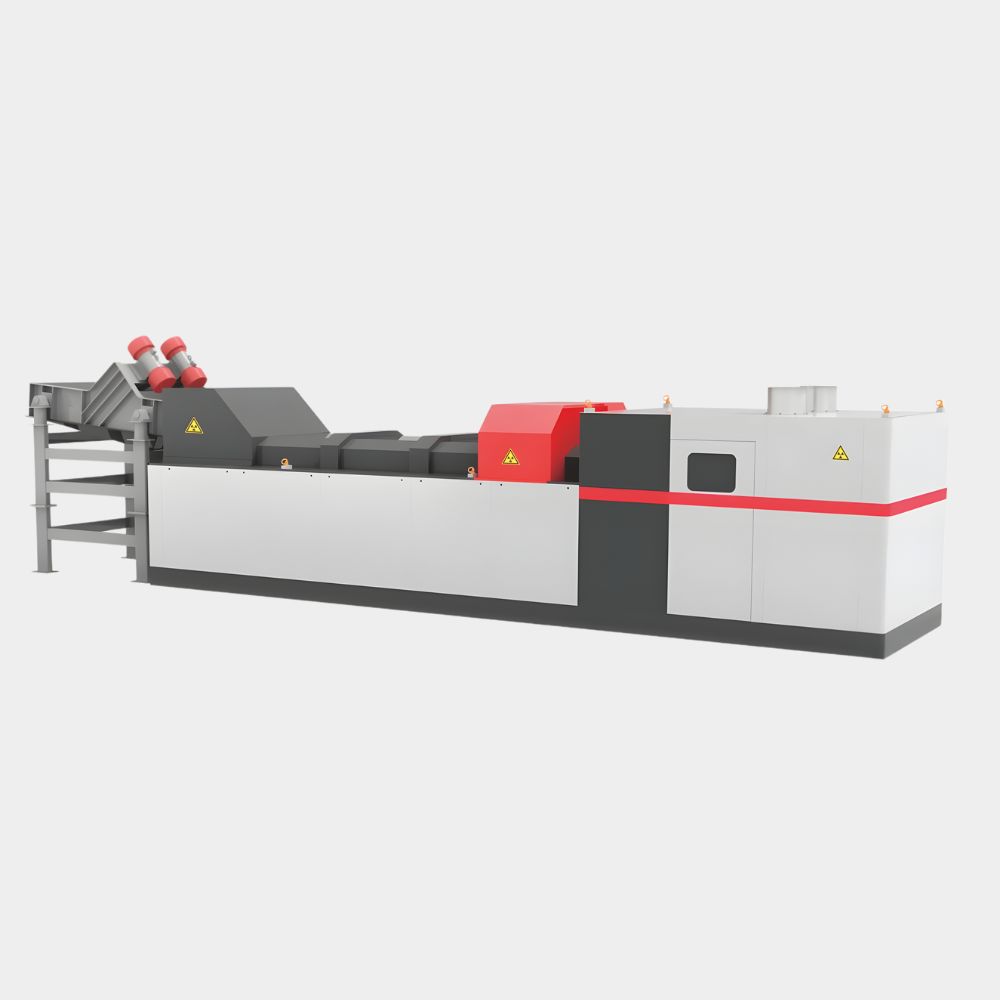
Crossbelt separators are used to remove larger pieces of ferrous material from a mixture of material on conveyor belts. They are usually used to recover ferrous, protect downstream equipment, or clean out impurities. They are available as rare earth, ceramic, or electromagnetic as needed for the job.
A hanging magnetic separator, also called a crossbelt or suspended magnet, hangs above a conveyor and pulls ferrous material out of the burden as it passes underneath. It is the most common way to remove tramp iron from a moving stream without interrupting the flow of material.
How it works
The magnet is suspended over the conveyor, usually across the belt rather than in line with it. Ferrous pieces in the burden are lifted out of the material stream, held against the face of the unit and carried sideways by a self cleaning belt running around the magnet, which discharges them into a chute clear of the main line. Everything non magnetic continues along the conveyor undisturbed.
What it is used for
- Recovering ferrous metal as a saleable product from a mixed stream
- Protecting downstream equipment from tramp iron that would damage crusher rotors, shredder hammers, screens and sorter belts
- Cleaning impurities out of a product stream to meet a specification
Most installations are doing at least two of these at once, which is why the machine usually pays for itself on protection value alone before the recovered metal is counted.
Types available
- Rare earth. Strong field, no power draw for the magnet, well suited to fine and moderately deep burdens
- Ceramic. Lower cost, effective on larger pieces and shallower burdens
- Electromagnetic. Adjustable field strength and deeper penetration, suited to heavy burdens and variable material
The choice comes down to how deep the material bed is, how large the target pieces are and whether the feed is consistent enough for a fixed field.
Getting the installation right
Performance depends more on installation than on the magnet specification. Three factors dominate:
- Suspension height. Magnetic force falls off sharply with distance, so a unit mounted too high loses capture rate quickly. Height is set at commissioning against the actual burden, not assumed from the drawing
- Burden depth. A deep bed shields the iron at the bottom. Spreading material thinner over a wider belt often works better than a stronger magnet
- Belt speed. Faster belts give the magnet less time to lift each piece
Where it belongs in the line
Ahead of any crusher, shredder or sorting equipment you want to protect, and generally as early in the process as the material allows. Iron removed at the front of the line is cheap. Iron that reaches a rotor is not.
Specifying a unit
We select the type and size from your belt width, burden depth, belt speed, particle size and the ferrous content in the stream, and we set the suspension height during commissioning against your actual running conditions.
It is a magnet suspended above a conveyor that pulls larger pieces of ferrous material out of the burden as it passes underneath, then discharges them to the side.
Recovering ferrous metal, protecting downstream equipment from tramp iron, and cleaning impurities out of a product stream. Most lines use it for at least two of those reasons at once.
Rare earth, ceramic and electromagnetic versions, selected according to the strength required and the depth of material on the belt.
From the burden depth, belt width and belt speed. Suspension height has a direct effect on capture rate, so it is set at commissioning rather than assumed.
Ahead of any crusher, shredder or sorting equipment you want to protect. Tramp iron removed early costs far less than a damaged rotor later.