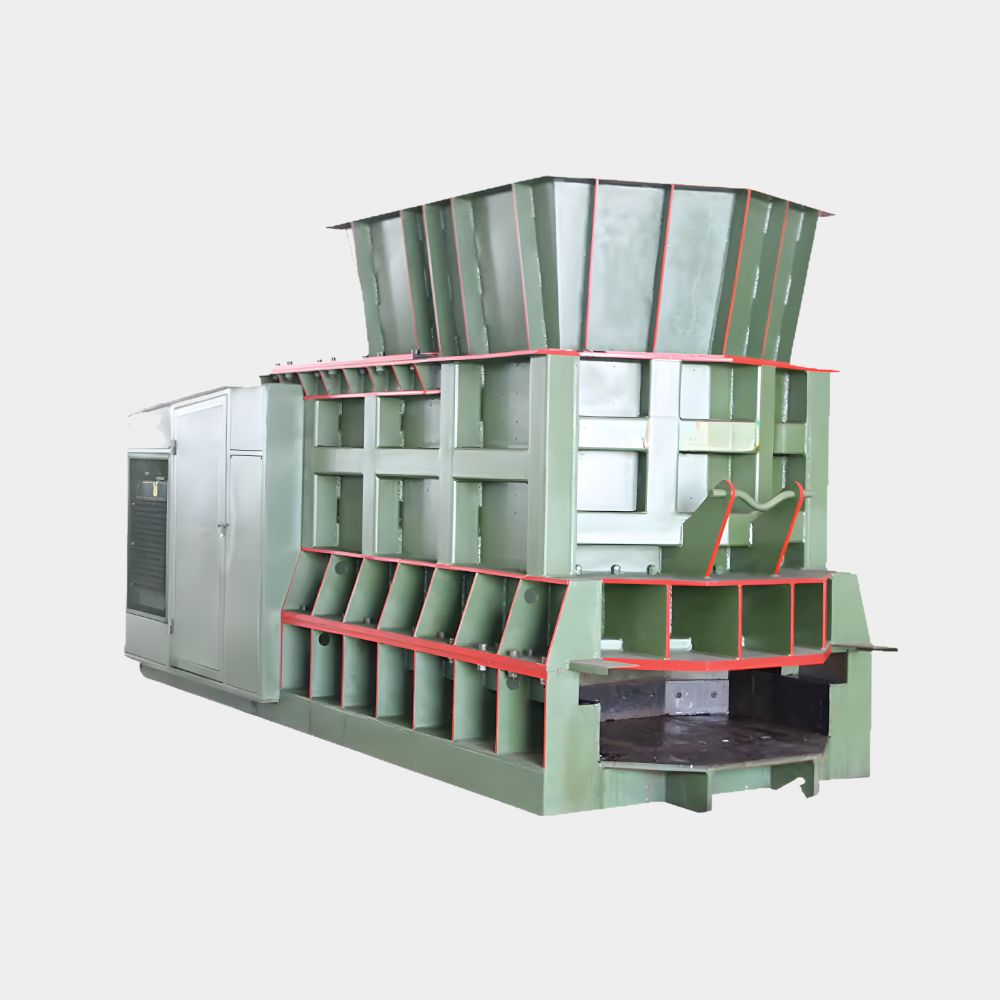
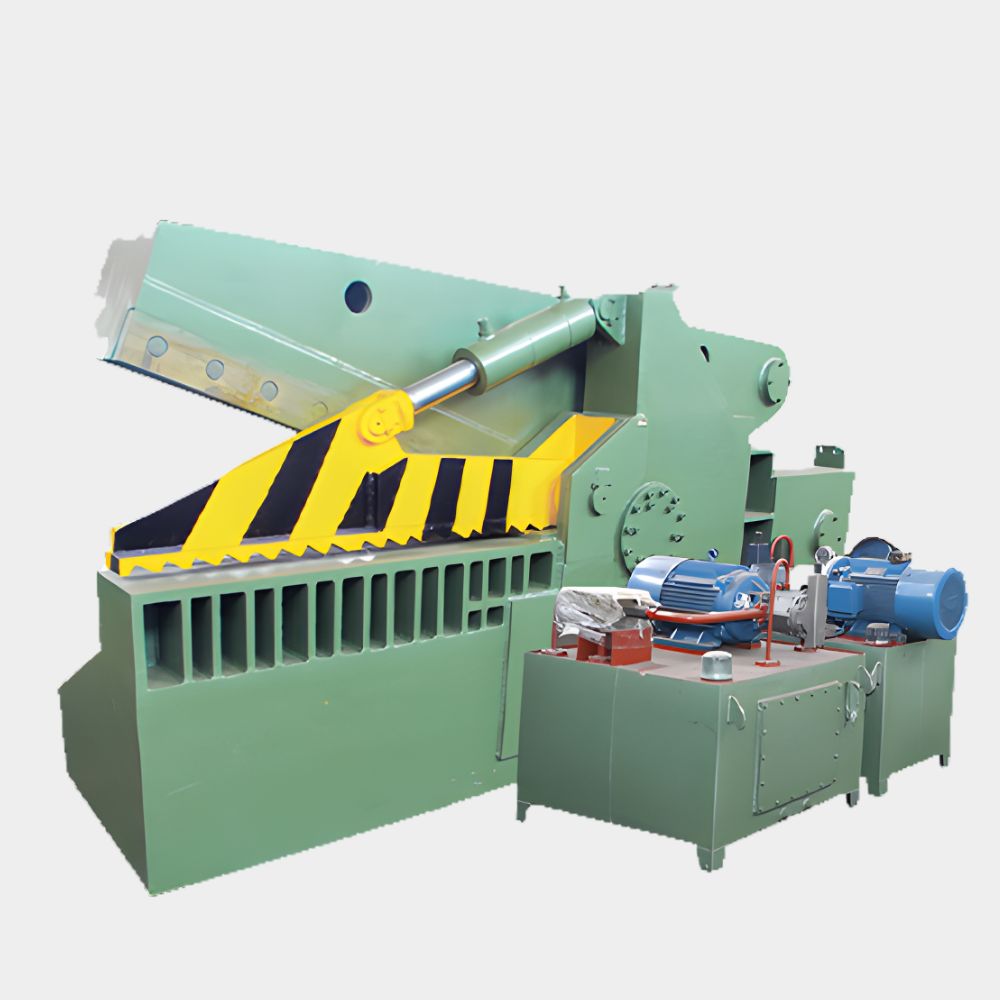
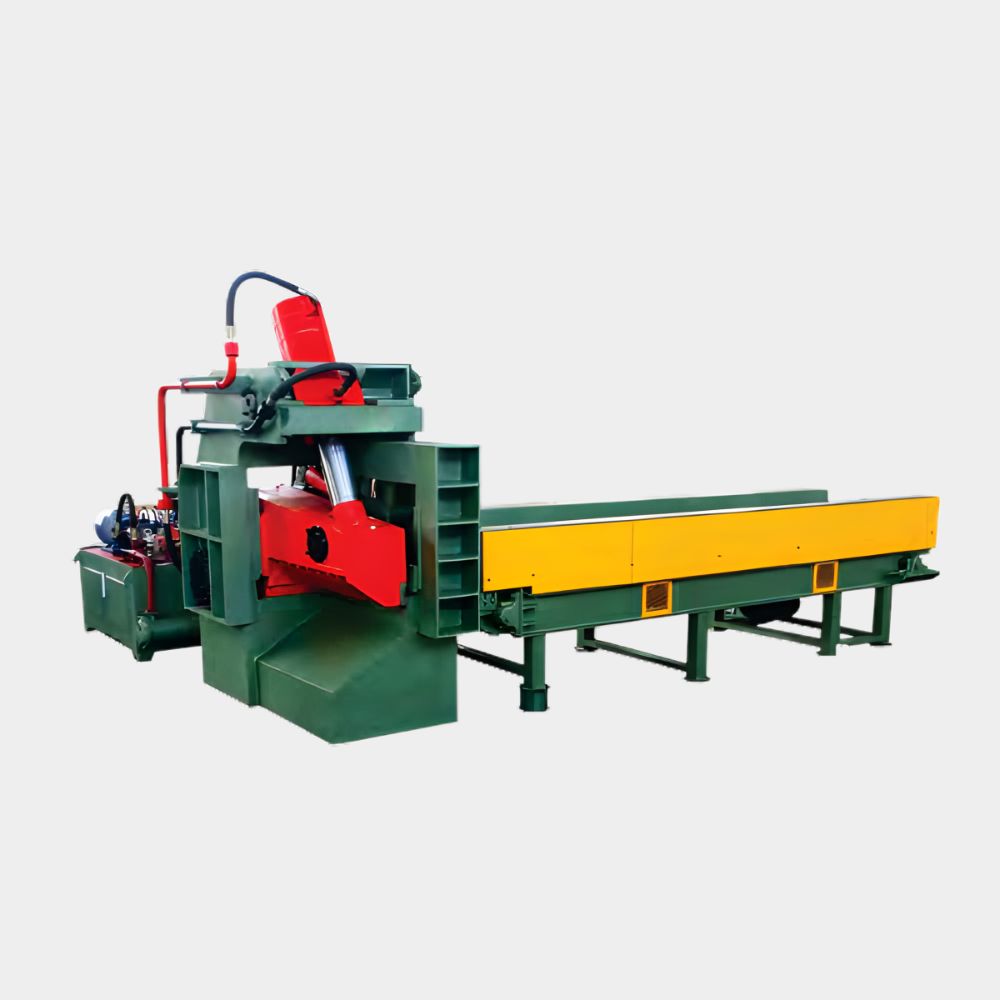
Baler Shear
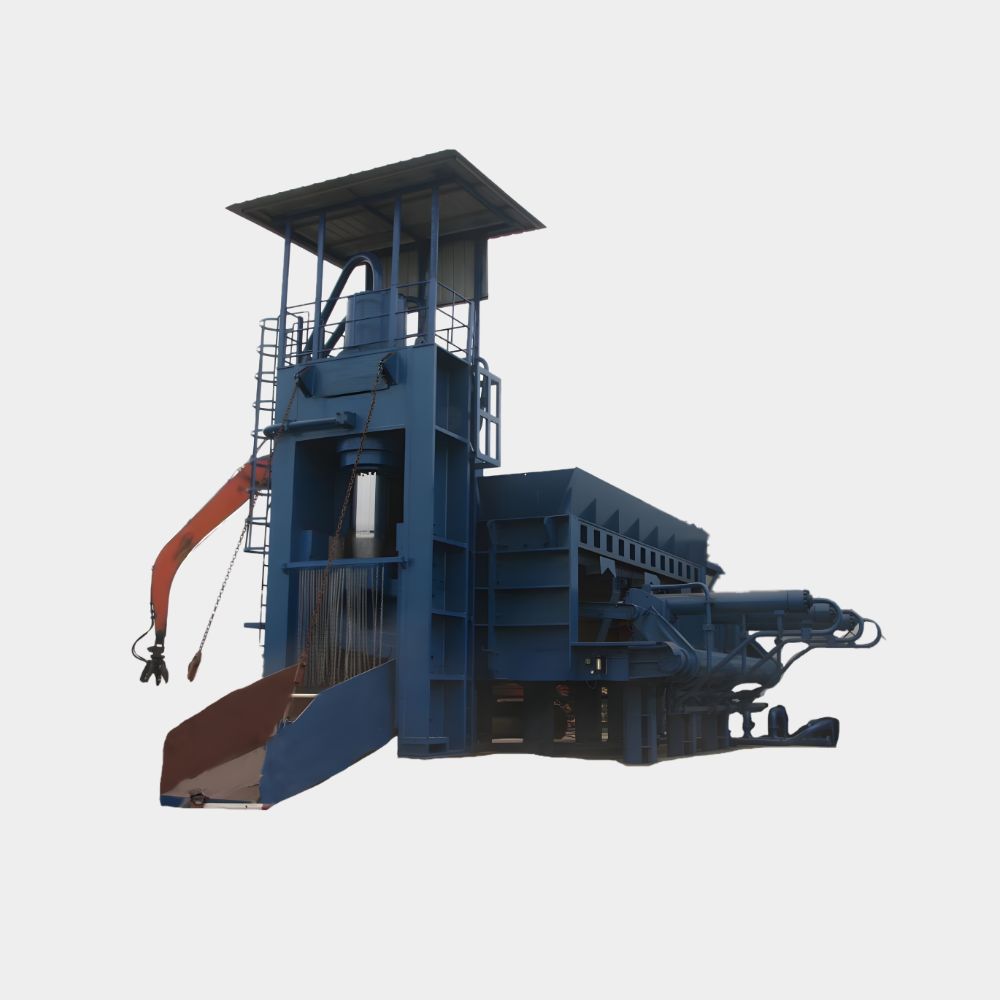
Heavy-duty Scrap Shears are suitable for compressing low-carbon light and thin scrap steel, scrap car shells, light metal structural parts, etc., into high-tight bales, and then shearing them into qualified charge that meets the smelting requirements of steel mills. A complete production line can be formed with the feeding and grasping machine or electromagnetic sucker, discharge conveyor, and stacking rotary conveyor, etc.
A baler shear combines high compression and shearing in one machine. Light material is first pressed into a tight bale and then sheared, so instead of loose cut scrap the output is dense pieces that meet the smelting requirements of steel mills directly.
Why compression before shearing matters
Shearing light sheet, thin section and vehicle shells without compressing them first produces a loose, low density output that costs more to transport than it is worth and melts inefficiently. Compressing first solves both problems in the same cycle. This is the reason a baler shear exists as a distinct machine rather than being a variant of a standard shear.
What it handles
- Low carbon light and thin scrap steel
- Scrap car shells and vehicle bodies
- Light metal structural parts
- Mixed light scrap of variable shape
Output
The machine produces qualified charge meeting steel mill smelting requirements, which means it can go directly to the furnace with no further preparation. High compression is applied after shearing, and side compression is available as an option where a higher density is specified.
Features
- Integrates high compression and shearing functions in a single machine
- PLC operation, automated controls and remote operation
- Automatic operator less running
- Large flow logic valves with independent filtering and cooling
- Low electricity consumption per tonne of steel processed
- Automatic lubrication and sensors for movement automation
Building it into a production line
A complete line can be formed around the machine with a feeding and grasping machine or electromagnetic sucker at the input, a discharge conveyor at the output and a stacking arrangement beyond that. This matters more than it sounds. A baler shear that has to wait for material, or that has to stop while someone clears the discharge, will never reach its rated tonnage regardless of how the machine itself is specified.
Hydraulic reliability
Independent filtering and cooling on the hydraulic circuit is what allows continuous running rather than intermittent output. Oil temperature is the practical limit on any machine working long compression cycles, so a circuit that manages its own thermal load is doing more for your throughput than a larger cylinder would.
Baler shear or straight bed shear
If your incoming material is heavy melting scrap and structural sections, a straight bed or gantry shear is the right machine. If it is light sheet, thin section and vehicle shells, a baler shear will give you far better output density from the same feed. Yards receiving both often run one of each rather than compromising with a single machine.
Double Press Box Technical Specifications
| Model | Max. Cutting Force (ton) | Press Box Size (L×W×H/mm) | Cutting Width (mm) | Production Rate (t/h) |
|---|---|---|---|---|
| Q91Y-500 | 500 | 5000 x 2000 x 1100 | 800 | 10 - 13 |
| Q91Y-630 | 630 | 6000 x 2200 x 1500 | 900 | 12 - 15 |
| Q91Y-800 | 800 | 6000 x 2200 x 1500 | 900 | 15 - 18 |
| Q91Y-1000 | 1000 | 7000 x 2500 x 1800 | 1000 | 18 - 22 |
| Q91Y-1250 | 1250 | 7000 x 2500 x 1800 | 1000 | 20 - 25 |
* Specifications are indicative and subject to change based on requirements and technical advancements.
It integrates high compression and shearing in one machine. The material is first compressed into a tight bale and then sheared, so you get dense pieces rather than loose cut scrap.
Low carbon light and thin scrap steel, scrap car shells, light metal structural parts and mixed light scrap. This is material that would give poor density if simply sheared without compression.
It produces qualified charge that meets the smelting requirements of steel mills, which means it can go directly to the furnace without further preparation.
Yes. A full production line can be formed with a feeding and grasping machine or electromagnetic sucker, a discharge conveyor and stacking arrangement, so the machine stays fed and cleared continuously.
It uses large flow logic valves with independent filtering and cooling. Independent cooling matters on a machine that runs long cycles, because oil temperature is what usually limits continuous output.
.jpg "Straight Bed Shear/Gantry Shear")