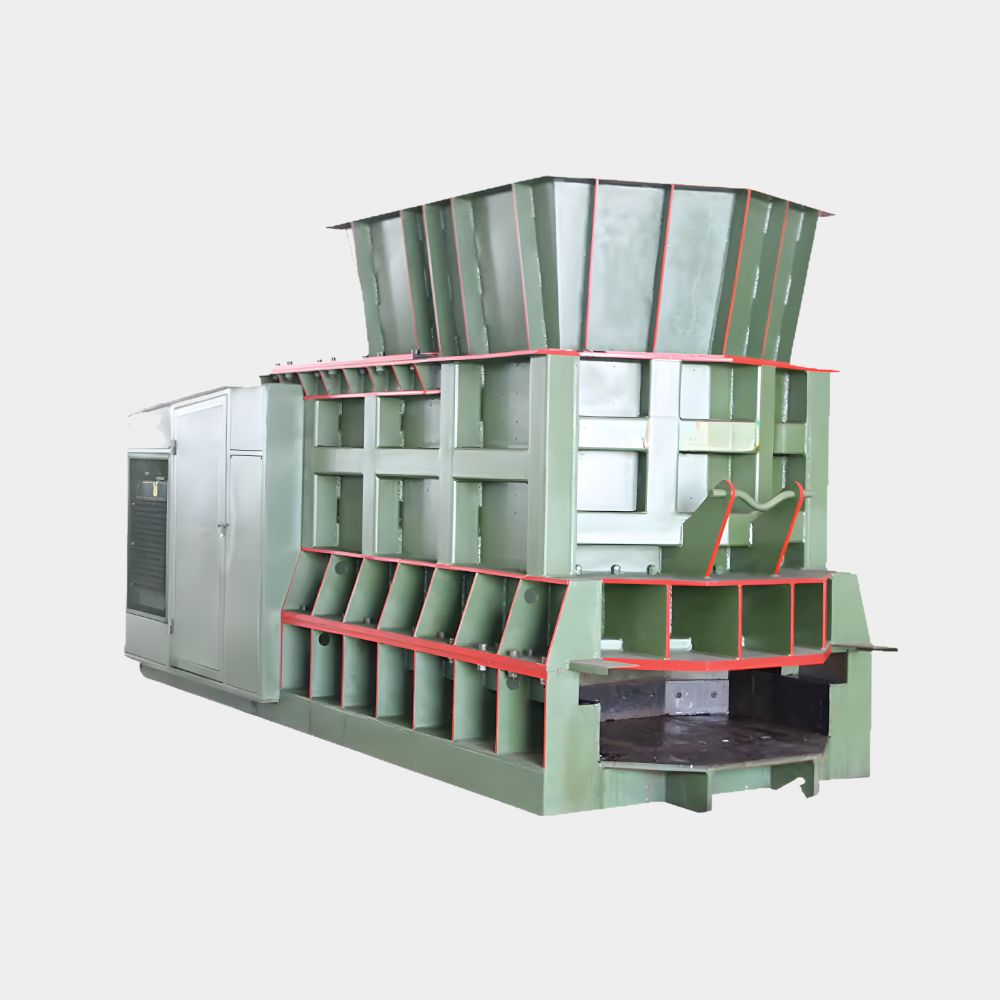
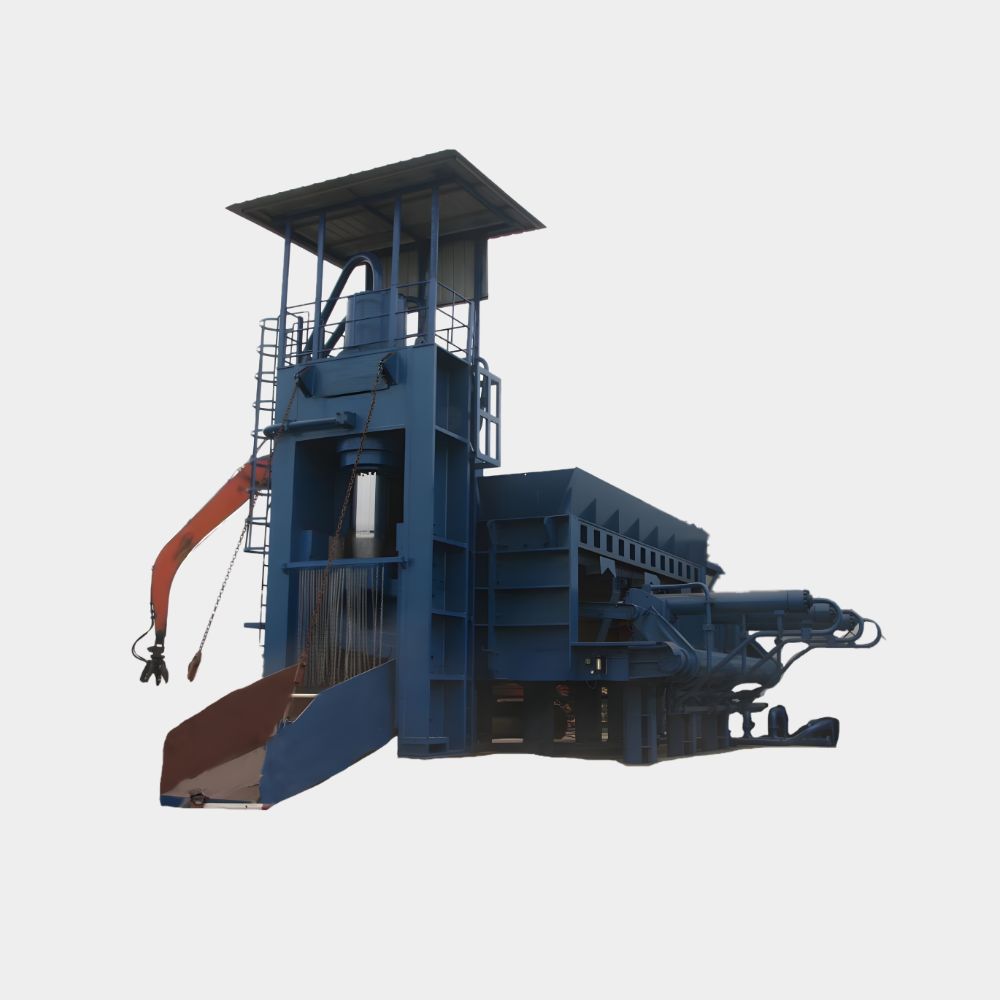
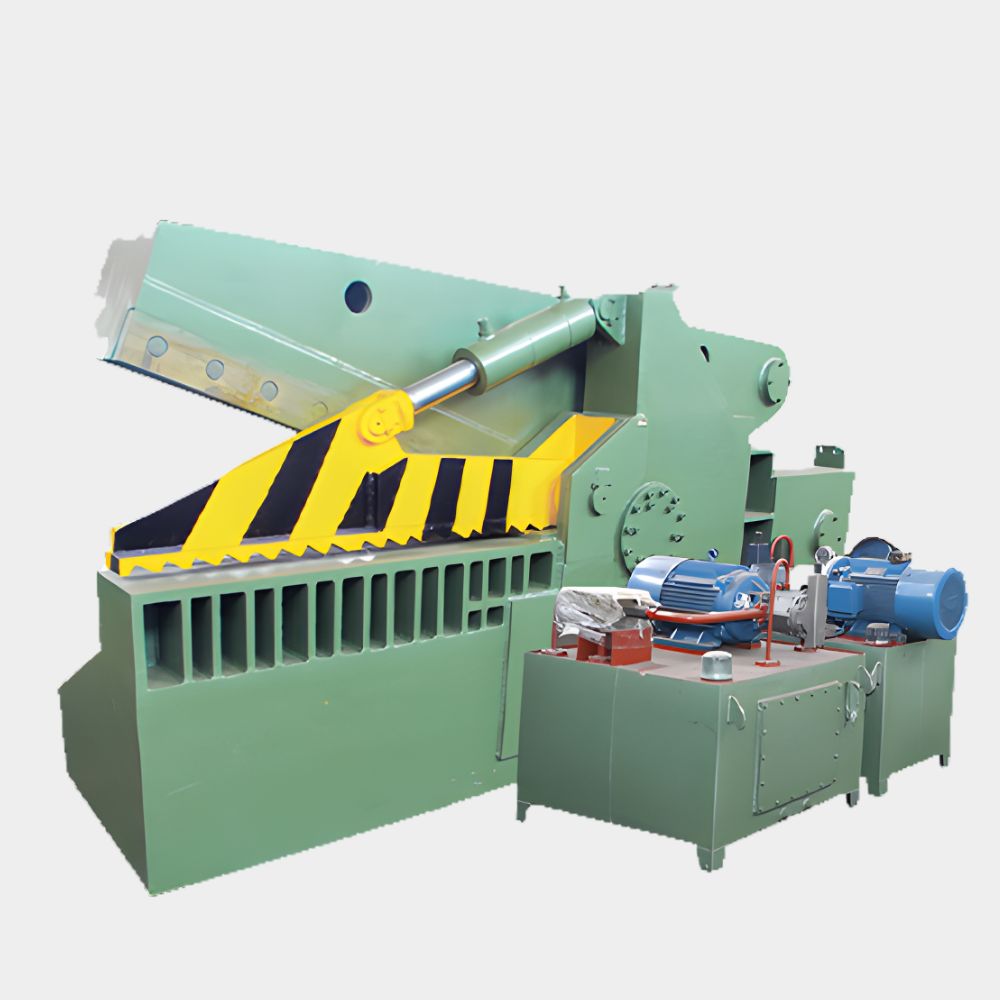
Scrap Car Shear
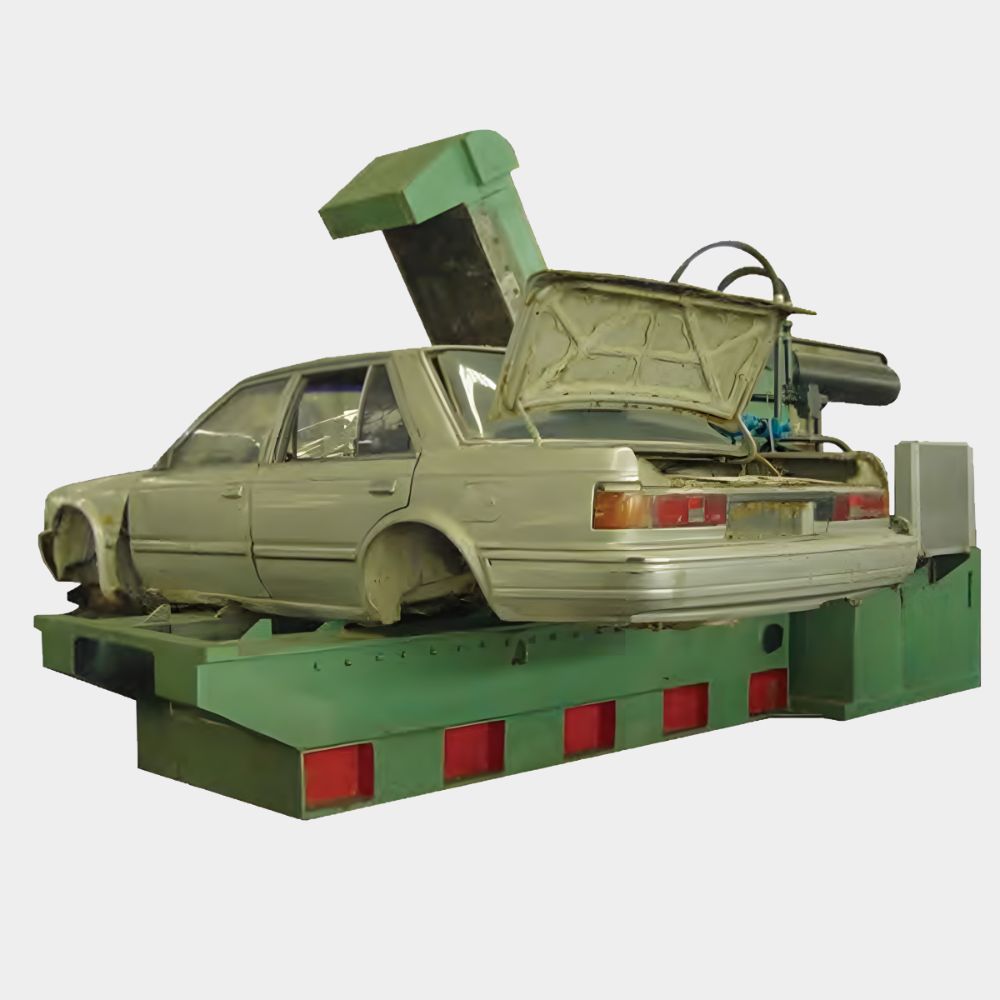
Suitable for shearing and baling of automobile shells and large container material. The pressed mass is suitable for shredding by a scrap shredder line, or it can also be baled for transportation to a shredder system.
A scrap car shear is built for shearing and baling automobile shells and large container material. It handles bulky, low density feed that a conventional shear struggles to hold and cut, compressing it first so the material is dense enough to be cut cleanly and handled economically afterwards.
The problem it solves
A car shell is mostly air. Loose shells are expensive to transport because you are paying to move empty space, and they are difficult to feed into a shredder because they bridge and jam. Reducing them first solves both problems in one operation, which is why this machine sits at the centre of most vehicle recycling flows.
What happens to the output
- Fed to a shredder line. The pressed mass is a suitable, consistent feed for a scrap shredder, with none of the bridging that whole shells cause
- Baled for transport. Where the shredder is at another site, the compressed material can be baled and shipped, and the freight saving against loose shells is substantial
Both routes are used, and the choice usually depends on whether you own a shredder or sell into one.
Control and safety
The machine uses hydraulic control, which makes overload protection straightforward to achieve. Running is smooth and the control arrangement is simple and device based, so the machine can be started and stopped as needed without complex sequencing. In practice that means a yard operator can be trained on it quickly rather than requiring a specialist.
Where it fits in an ELV operation
In a properly run end of life vehicle facility the sequence is depollution, then dismantling of reusable and hazardous components, then reduction of the remaining shell. This machine handles the last step. Placing it correctly relative to the dismantling bays and the outbound loading area is what keeps material moving, since shells are bulky and a poorly placed machine creates a queue that backs up through the whole facility.
Relevance to vehicle scrapping in India
As the vehicle scrapping policy matures, organised facilities will need equipment that can process shells at volume rather than handling them individually. Machines of this type are the practical answer, and facilities being designed now generally plan for capacity above current volumes so they can absorb growth without a second installation.
Specifying a machine
Specification is driven by the vehicle mix you handle, the number of shells per shift, whether the output feeds your own shredder or leaves the site, and the space available for feeding and discharge. Tell us those four things and we will size the machine and plan the material flow around it.
Double-Edged Hydraulic Alligator Shears Technical Parameters
| Model | Max. Cutting Force (ton) | Blade Length (mm) | Press Box Size (L×W×H/mm) | Bale Size (W×H/mm) | Main Motor Power (kW) |
|---|---|---|---|---|---|
| Q43ll-2500 | 250 | 2020 | 2020×600×600 | 600×400 | 2 × 17.5 |
| Q43ll-3150 | 315 | 2500 | 2500×800×900 | 800×600 | 45 |
| Q43ll-4000 | 400 | 2500 | 2500×800×900 | 800×600 | 55 |
| Q43ll-5000 | 500 | 2500 | 2500×800×900 | 800×600 | 55 |
* Specifications are indicative and subject to change based on requirements and technical advancements.
Shearing and baling of automobile shells and large container material. It is built for bulky, low density feed that ordinary shears struggle to hold and cut.
The pressed mass is suitable for shredding by a scrap shredder line, or it can be baled for transport to a shredder located elsewhere. Both routes save considerably on freight compared with moving loose shells.
It uses hydraulic control, which makes overload protection easy to achieve. Operation is straightforward and the machine runs smoothly on a simple device based control arrangement.
Yes. Once a vehicle has been depolluted and dismantled, the shell has to be reduced before it can be economically shredded or transported, and this machine handles that step.
Very little. The controls are simple and the cycle is repetitive, so a yard operator can be trained on the machine quickly.
.jpg "Straight Bed Shear/Gantry Shear")